It's the one layer of your exterior you'll never see once the siding goes up — and the one that decides whether your walls stay dry for decades. Here's why house wrap matters in Utah.
When homeowners compare exterior quotes, they usually focus on what they can see: the siding profile, the stucco texture, the stone. But the layer that decides whether a wall lasts 30 years or rots out in 8 is the one nobody sees once the job is done — the house wrap. It's the difference between a beautiful exterior and a durable one, and along the Wasatch Front it matters more than most people realize.
What house wrap actually does
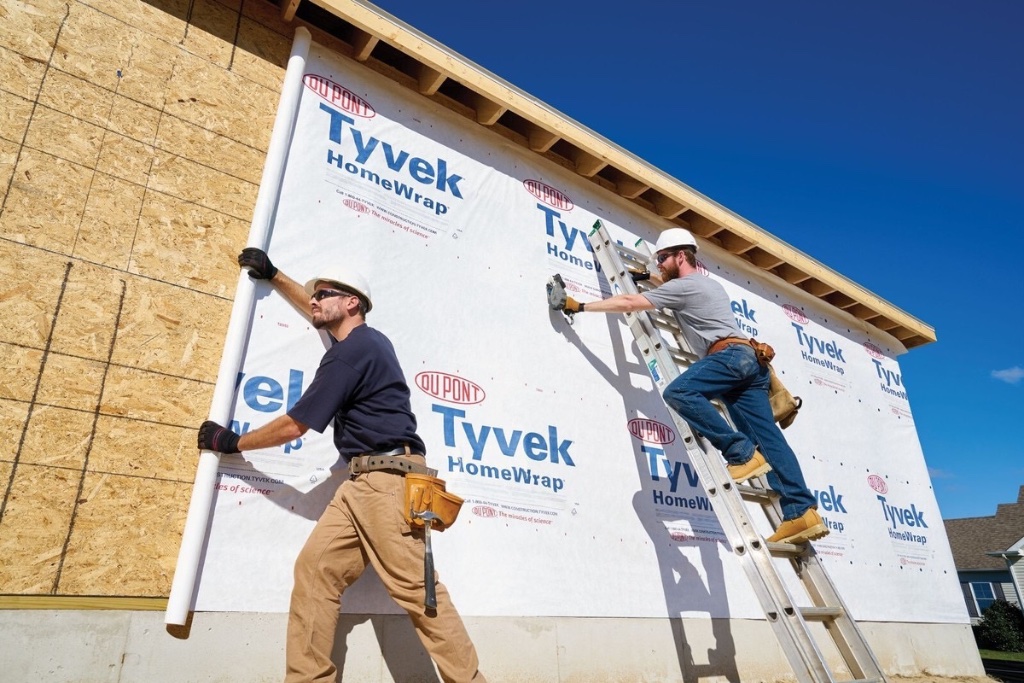
House wrap (a weather-resistive barrier, or WRB) is the sheet that goes over your sheathing and behind your siding, stucco, or stone. Its job is deceptively simple but critical: it lets your walls breathe while keeping bulk water out.
- Sheds water that gets past the siding. No exterior cladding is perfectly watertight — wind-driven rain and melting snow always find their way behind it. House wrap catches that water and drains it back out.
- Blocks air infiltration. A proper WRB cuts drafts, which lowers heating bills through a Utah winter.
- Lets vapor escape. Moisture inside the wall assembly needs a way out. Quality house wrap is vapor-permeable, so walls dry instead of trapping dampness that leads to rot and mold.
Why it matters more in a Utah climate
Our climate is brutal on wall assemblies. Bone-dry summers with intense UV, then heavy snow loads and repeated freeze-thaw cycles all winter. That swing is exactly what breaks down cheaper barriers or sloppy installations:
- Snow piles against walls and slowly melts, driving moisture at the sheathing for days at a time.
- Freeze-thaw pushes any trapped water deeper into the assembly.
- Summer heat then bakes whatever moisture is left, accelerating rot and delamination.
A well-installed WRB gives that moisture a consistent path out no matter the season. A poorly lapped or torn one becomes a funnel that channels water into the wall instead.
Installation is everything
Here's the part that separates a lasting exterior from an expensive callback: house wrap only works if it's installed right. The material is only half the equation. Done correctly, it means:
- Proper shingle-style lapping — upper layers overlap lower ones so water always sheds downward and outward, never behind.
- Integrated flashing at every window, door, and penetration, tied into the wrap so those weak points drain instead of leak.
- Sealed seams and fastener penetrations with the correct tape, not just staples and hope.
- No wrinkles or tears that create pockets where water can pool.
We've opened up plenty of walls where the wrap was technically "there" but reverse-lapped or unflashed at the windows — and the sheathing behind it was black with rot. The material didn't fail. The install did.
What to ask your contractor
Because you'll never see this layer again after siding goes up, it's worth asking about before the work starts:
- What weather-resistive barrier do you use, and why?
- How do you flash and integrate around windows and doors?
- Do you seal seams and penetrations, or just fasten the wrap?
A contractor who lights up talking about their WRB details is one who cares about the parts of your home you can't see — which is exactly where longevity lives. If you're planning new siding or stucco, we're glad to walk you through how we build the wall from the sheathing out, so you know your investment is protected for the long haul.