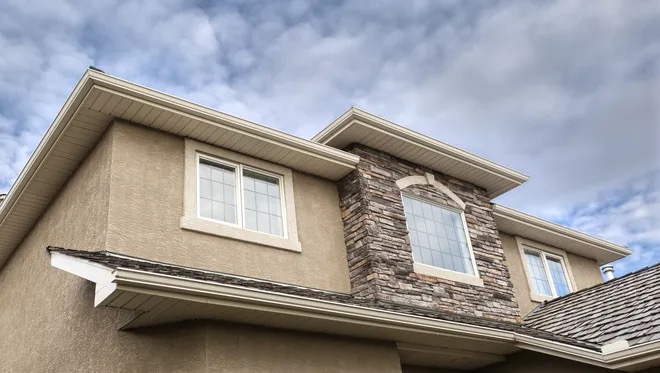
That hairline crack across your stucco isn't always cosmetic. Here's what Utah's freeze-thaw winters actually do to a wall — and the right way to fix and prevent it.
You spot a thin line running across your stucco one morning and the question hits immediately: is this just cosmetic, or the first sign of something expensive hiding behind the wall? Along the Wasatch Front, that question comes up a lot. From older Salt Lake neighborhoods to newer builds in Stansbury Park and Tooele, stucco homes that looked rock-solid a few years ago start showing their age — and Utah's climate is usually the reason why.
Stucco is one of the most common exterior finishes in Utah for good reason. It's dense and layered, so it helps regulate indoor temperature through hot summers and cold winters. It resists UV far better than wood or vinyl, so it fades and needs repainting less often. And applied as one continuous surface, it gives a home that clean, timeless look. But no material is invincible — and understanding why stucco cracks is the key to knowing which cracks to shrug off and which ones to take seriously.
The real culprit: Utah's freeze-thaw cycle
This is the single biggest reason stucco cracks along the Wasatch Front. Our winter days can swing 30 degrees or more between a sunny afternoon and a hard overnight freeze. Here's what that does to a wall:
- During the day, sun and warmer air melt snow and let moisture seep into tiny surface pores and hairline cracks.
- Overnight, that trapped water freezes and expands.
- Every freeze pushes a little harder against the surrounding stucco, widening cracks that started nearly invisible.
Repeat that dozens of times over a single winter and you get a spreading network of fractures. North-facing walls — the ones that stay cold and shaded longest — almost always show it first and worst. Older stucco is especially vulnerable, particularly if it was installed without a proper drainage layer or weather-resistive barrier behind it.
Moisture behind the wall — even in a dry state
Utah is dry, so trapped moisture surprises people. But it happens constantly, and it rarely comes from the air:
- Gutters that overflow or dump snowmelt against the wall
- Downspouts draining too close to the foundation
- Failed caulking or missing flashing around windows and doors
When water gets in and can't get back out, it weakens the bond between the stucco and the sheathing underneath. The warning signs show up as brown or dark streaks near windows and along the base of walls, bubbling or peeling paint, soft spots, or a musty smell inside. Left alone, that hidden dampness leads to crumbling stucco, wood rot, and eventually mold.
Settling and structural movement
Every house shifts as it ages, and Utah's mix of clay-heavy and sandy soils makes some lots settle more than others. As a foundation moves, the rigid stucco layer above it cracks along corners, joints, and seams. Minor settling cracks are normal. Sudden, wide, or fast-growing splits are not — those can point to a foundation or framing issue that deserves a closer look.
How to read the crack you're looking at
Not every crack means the same thing. Here's how we size them up:
- Hairline cracks — thinner than a credit card, usually from normal curing or seasonal movement. Not urgent, but seal them early so moisture doesn't turn them into a bigger problem.
- Cracks wider than 1/8 inch — a red flag. These often signal settling, structural stress, or water getting in behind the wall.
- Spiderweb or "map" cracking — a pattern of interconnected cracks usually means the original stucco was applied too thick or dried too fast. This is more than cosmetic and needs a professional.
A good rule of thumb: if cracks keep spreading, appear right after a freeze, or line up with damp spots inside, it's time to get eyes on it.
Fixing it the right way — not just painting over it
Here's where a lot of Utah stucco repairs go wrong. Smearing elastomeric or acrylic paint over a crack to "seal" it almost never survives a full freeze-thaw season here — the wall keeps moving and the patch tears right back open. Doing it properly means:
- Chasing down the cause — the drainage issue, the failed flashing, the settling — not just the symptom
- Opening and properly filling structural cracks rather than skinning over them
- Rebuilding with correct expansion detailing so the wall can flex with the seasons
- Matching texture and color so the repair disappears into the surrounding finish
Preventing the next round of cracks
A little maintenance goes a long way in this climate:
- Keep gutters clean and re-pitched so snowmelt drains well away from the walls
- Route downspouts several feet from the foundation
- Re-seal caulking and check flashing around windows and doors before winter
- Walk your exterior after heavy snowmelt and look for new staining or hairline cracks
Catching a hairline crack in the fall is a small job. Ignoring it until water has been freezing behind your wall for two winters is not. If your stucco is starting to show its age, the smartest move is an honest look before the next freeze — that's exactly the kind of no-pressure inspection we're happy to do.