Those heavy icicles hanging off your eaves are a warning, not a decoration. Here's how ice dams form on Wasatch Front homes — and how the right soffit, fascia, and ventilation stop them.
Every Utah winter, the same thing happens on rooflines across the Wasatch Front: a ridge of ice builds up along the eaves, thick icicles hang off the gutters, and homeowners assume it's just part of living where it snows. It isn't. That ice is an ice dam, and it's usually a sign that your roof, insulation, or ventilation isn't doing its job — and your soffit, fascia, and gutters are the parts that pay the price.
What an ice dam actually is
An ice dam is a ridge of ice that forms at the edge of a roof. The sequence goes like this:
- Snow builds up on the roof.
- Heat escaping from inside the home warms the upper part of the roof deck.
- That heat melts the snow near the top of the roof.
- The meltwater runs down to the cold roof edge — over the eaves, where there's no warm attic beneath — and refreezes.
Repeat that freeze-and-thaw cycle and you get a solid block of ice at the eaves. That dam then traps more meltwater behind it, and the water has nowhere to go but up and under your shingles.
Why this wrecks soffit, fascia, and gutters
Ice is heavy, and an ice dam concentrates all that weight right at the most vulnerable edge of your home. On Wasatch Front houses we see it do real damage:
- Pulls gutters away from the house and bends or cracks the gutter run
- Rots and warps fascia boards as trapped water sits against them
- Damages soffit panels and loosens the fasteners and brackets holding everything up
- Backs water under shingles into the decking, then into ceilings and walls as stains and bubbling paint
Once the gutter system is compromised, it can't handle spring snowmelt or summer storms either — so a winter problem quietly becomes a year-round one.
The root cause is usually air and ventilation
Here's the part most homeowners miss: ice dams aren't really a "snow" problem. They're a heat-and-airflow problem. The warm spots that melt your snow unevenly come from:
- Not enough attic insulation, letting living-space heat rise into the attic and warm the roof deck
- Air leaks into the attic around recessed lights, attic hatches, bath and kitchen exhaust fans, and gaps at chimneys and plumbing vents
- Poor roof ventilation — and this is where soffit and fascia come in directly
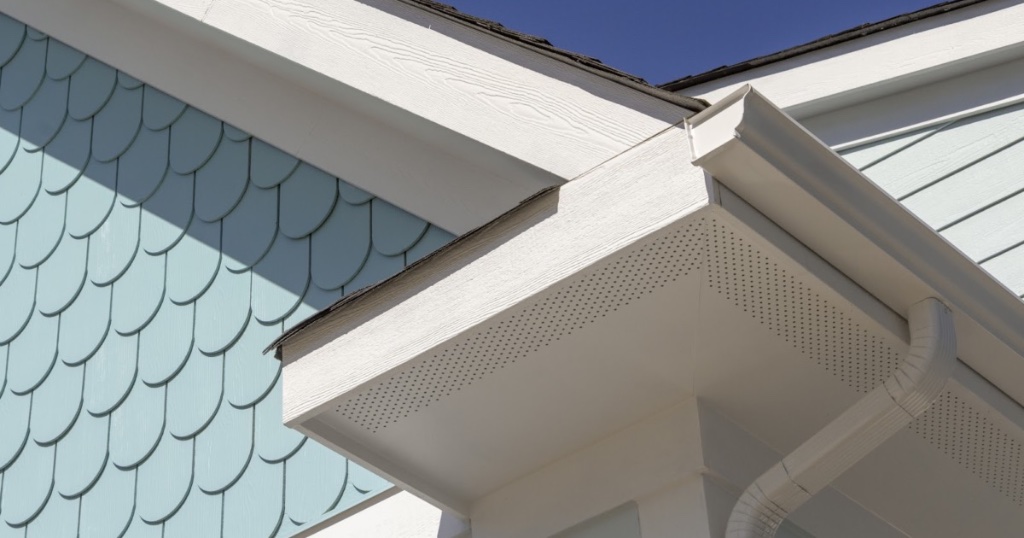
A healthy roof needs balanced ventilation: cold outside air comes in low through the soffit vents and exhausts high through a ridge vent. That airflow keeps the roof deck close to the outdoor temperature, so snow doesn't melt from below in the first place. When soffit intake is blocked, missing, or rotted — or when insulation is stuffed over the vents — that airflow stops and the roof warms up. In other words, failing soffit and fascia don't just look bad; they actively feed the ice-dam cycle.
Warning signs to watch for
You can't see the top of your roof, but you can spot the tells from the ground and inside:
- Thick ridges of ice along the roof edge and heavy icicles off the gutters
- Ice forming only in certain valleys or low points
- Water stains or damp spots on ceilings and exterior walls
- Peeling paint around window frames or along the ceiling line
- Frost or moisture on the underside of the roof decking in the attic
What to do if you already have one
Safety first — don't climb an icy roof, and never chip at the ice with a hammer, axe, or shovel. You'll wreck shingles and gutters or take a fall. Safer short-term steps:
- Use a roof rake from the ground to pull snow off the first few feet above the eaves
- Move valuables away from any interior leak and protect floors
- Call a pro to inspect for hidden damage before it spreads
The real fix: seal, insulate, and ventilate
The only way to stop ice dams for good is to address the cause. That means air-sealing attic leaks, bringing insulation up to level, and — critically — restoring balanced ventilation with clear soffit intake and proper exhaust. Where soffit and fascia have already rotted or sagged, replacing them with vented soffit and clean, water-shedding fascia does double duty: it finishes the roofline and gets your attic breathing right again.
If you're seeing heavy icicles, sagging gutters, or new water stains after a storm, don't wait for it to get worse over the next freeze. A look at your soffit, fascia, and roofline now is a lot cheaper than repairing rot and interior leaks in the spring — and it's exactly the kind of exterior work we handle across the Wasatch Front.